Disclaimer: This article is intended solely for informational and educational purposes only. It does not constitute medical advice.
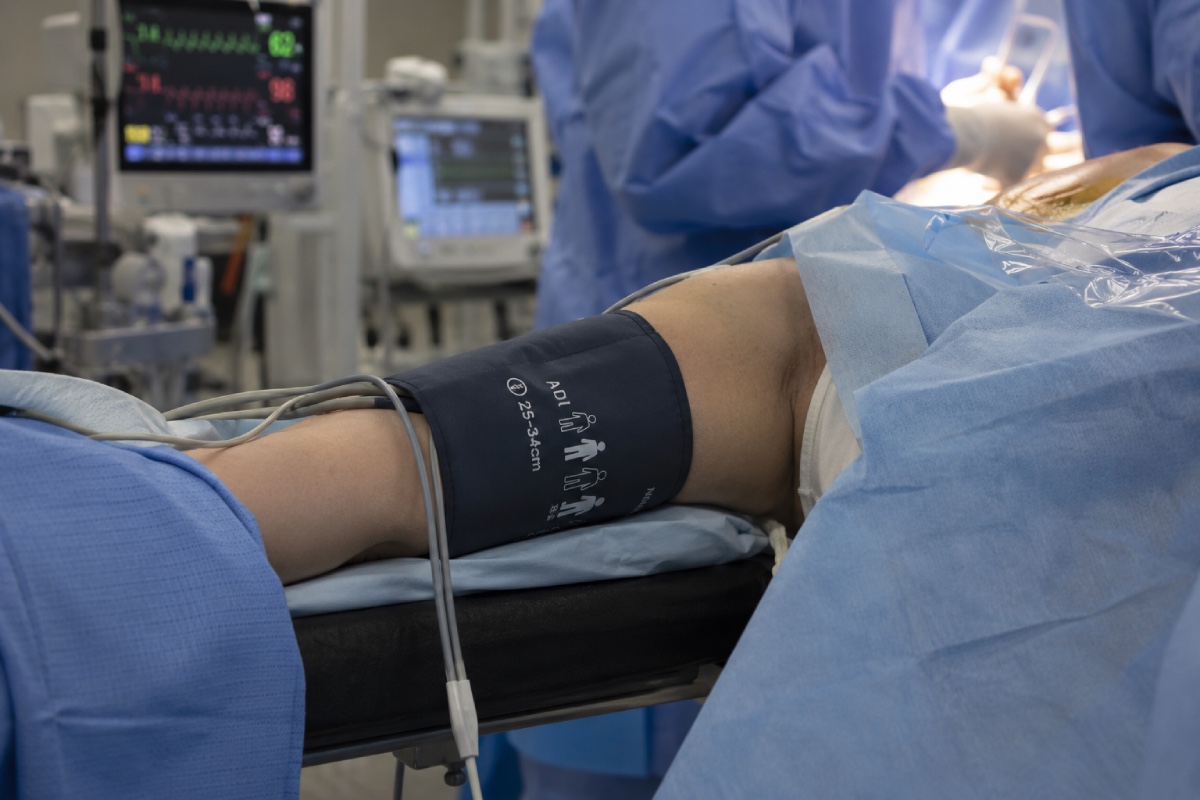
Intraoperative blood pressure (BP) monitoring is a fundamental component of anesthetic care, providing clinicians with information about circulatory stability and allowing prompt recognition and treatment of hypotension or hypertension. For patients undergoing surgery without an arterial catheter for continuous monitoring, automated noninvasive intermittent blood pressure (NIBP) monitoring is the most common method used. Although the optimal measurement interval may vary according to patient and procedural factors, current standards generally recommend measuring BP at least every 5 minutes during anesthesia.
The American Society of Anesthesiologists (ASA) Standards for Basic Anesthetic Monitoring recommend that arterial blood pressure and heart rate be determined and evaluated at least every 5 minutes. This interval represents a minimum monitoring standard rather than an optimal interval for every patient. Similarly, guidelines from the Association of Anaesthetists in the UK recommend NIBP measurements at least every 5 minutes during anesthesia.
The rationale for higher-frequency blood pressure monitoring is the potentially rapid development of intraoperative hypotension. General anesthesia, neuraxial anesthesia, positive-pressure ventilation, blood loss, changes in surgical stimulation, and administration of vasoactive medications can all produce substantial changes in BP over several minutes. Observational evidence suggests that lower-frequency intermittent blood pressure monitoring measurements may be associated with delayed recognition of hypotension. In a retrospective analysis of more than 139,000 general anesthesia cases, NIBP intervals exceeding 6 minutes were associated with approximately fourfold higher odds of hypotension; intervals exceeding 10 minutes demonstrated a similar association.
However, the 5-minute interval should not be viewed as universally sufficient. Patients with significant cardiovascular disease, substantial baseline hypertension, anticipated hemodynamic instability, major blood loss, or procedures associated with rapid physiologic changes may benefit from more frequent measurements. The 2026 Association of Anaesthetists/British and Irish Hypertension Society guideline specifically recommends reducing the interval between NIBP measurements in patients at increased risk from perioperative hypotension or hypertension and maintaining a low threshold for continuous invasive arterial pressure monitoring.
For patients requiring very close hemodynamic surveillance during surgery, an arterial catheter provides continuous beat-to-beat BP measurement and may be preferable to increasing the frequency of intermittent cuff measurements of blood pressure. This approach is indicated during major surgery, significant hemodynamic instability, or when frequent blood sampling is anticipated.
The clinical importance of frequent BP assessment is further supported by evidence linking intraoperative hypotension to adverse outcomes. Current perioperative cardiovascular guidelines recommend maintaining an intraoperative mean arterial pressure of at least 60–65 mmHg or systolic BP of at least 90 mmHg during noncardiac surgery to reduce the risk of myocardial injury. Because the severity and duration of hypotension both influence risk, minimizing periods during which hypotension remains undetected is an important component of intraoperative management.
In summary, BP should generally be measured at least every 5 minutes during anesthesia when using intermittent NIBP monitoring. More frequent measurements should be considered when rapid hemodynamic changes are anticipated or when patient-specific risk is elevated. In patients requiring continuous or highly precise hemodynamic assessment, invasive arterial monitoring may be more appropriate than simply shortening the NIBP interval. Ultimately, the frequency of monitoring should be individualized according to the patient’s comorbidities, anesthetic technique, surgical procedure, and anticipated hemodynamic risk.
References
- American Society of Anesthesiologists. Standards for Basic Anesthetic Monitoring. American Society of Anesthesiologists; 2020.
- Klein AA, Meek T, Allcock E, et al. Recommendations for standards of monitoring during anaesthesia and recovery 2021. Anaesthesia. 2021;76(9):1212-1223. doi:10.1111/anae.15501. DOI: 10.1111/anae.15501
- Sessler DI, Meyhoff CS, Zimmerman NM, et al. Period-dependent associations between hypotension during and for four days after noncardiac surgery and a composite of myocardial infarction and death. Anesthesiology. 2018;128(2):317-327. DOI: 10.1097/ALN.0000000000001985
- McCormack T, et al. Measurement and management of adult blood pressure in the peri-operative period: updated guidelines from the Association of Anaesthetists and the British and Irish Hypertension Society. Anaesthesia. 2026. DOI: 10.1111/anae.70082
- Wesselink EM, Kappen TH, Torn HM, Slooter AJC, van Klei WA. Intraoperative hypotension and the risk of postoperative adverse outcomes: a systematic review. Br J Anaesth. 2018;121(4):706-721. DOI: 10.1016/j.bja.2018.04.036
- Fleischmann KE, et al. 2024 AHA/ACC/ACS/ASNC/HRS/SCA/SCCT/SCMR/SVM guideline for perioperative cardiovascular management for noncardiac surgery. Circulation. 2024. DOI: 10.1016/j.jacc.2024.06.013