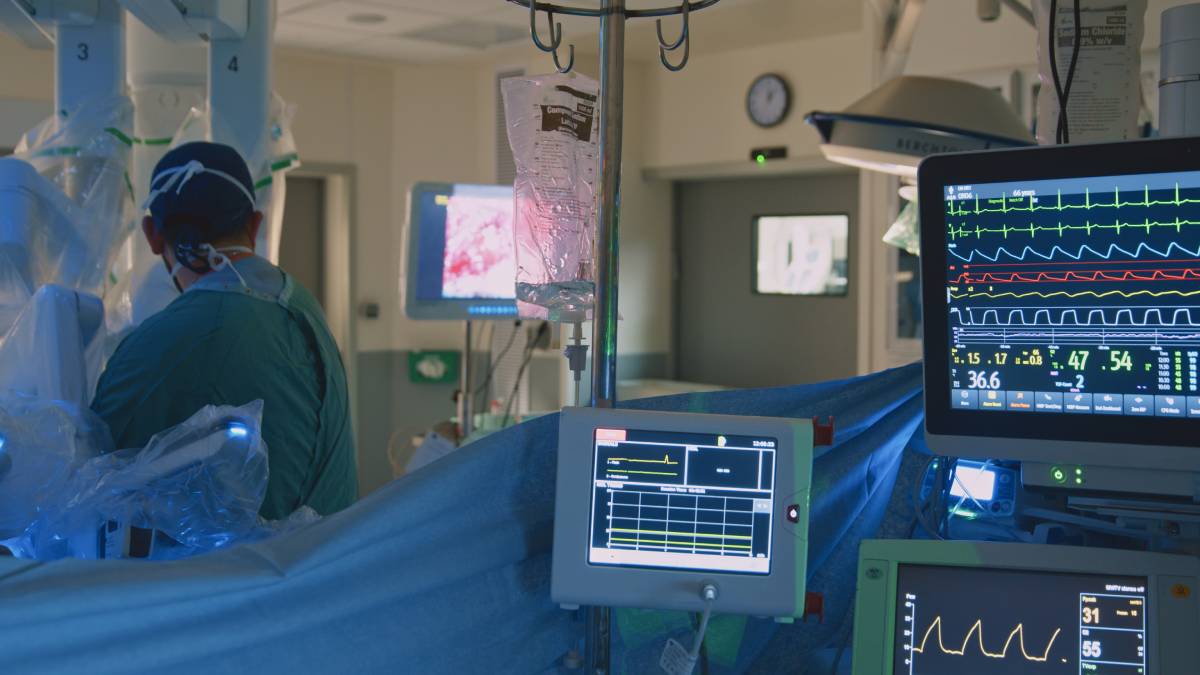
Intraoperative hemodynamic monitoring can be categorized as the invasive or noninvasive monitoring of blood pressure, heart rate, and oxygenation. Noninvasive monitoring commonly refers to sphygmomanometry, or the colloquial blood pressure cuff, usually paired with a pulse oximeter. Invasive measures of hemodynamic status involve the placement of catheters within an artery.1 Surgery can often be safely performed while relying on noninvasive hemodynamic monitoring, but anesthesiologists and surgeons must be ready to convert to invasive monitoring if the patient’s condition requires it.
The decision to transition to invasive hemodynamic monitoring during surgery is dependent upon multiple factors—most importantly, whether the patient stable or unstable from a hemodynamic perspective.1 Most commonly, the radial artery of the wrist is the ideal candidate for cannulization for invasive monitoring.1 While there are numerous methodologies by which to monitor hemodynamics intraoperatively, ultimately, it is up to the discretion of the anesthesiologist, taking into account the surgery, risk factors, and perceived necessitated postoperative regulation, to determine the optimal method of hemodynamic monitoring.
An alternative site of invasive hemodynamic monitoring is the pulmonary artery. Although peripheral artery cannulization is easier and less invasive (i.e., requires less traversing of intra-corporeal elements than the pulmonary artery catheter), on average, it does not offer as much information on patient hemodynamics as the pulmonary artery catheter does.2 Both options provide invaluable information for hemodynamic monitoring— most importantly, second-by-second arterial blood pressure monitoring. However, the pulmonary artery catheter provides additional information regarding right ventricular function and its relation to the lungs and the lungs’ circulatory system.2 In addition, it provides information related to filling (i.e., related to blood flow, stagnant and dynamic, of right heart chambers). 3
An additional source of hemodynamic monitoring involves a line inserted into the proximal vessels relative to the heart. This line is referred to as a central line and is commonly placed in the right internal jugular vein.4 It provides valuable information related to the volume status of the patient and can provide crucial information on the patient’s response to vasopressors. It is especially valuable for those starting off with low intravascular volume.4
There are numerous methodologies by which to assess intraoperative hemodynamics for the average patient. Individualized approaches depend upon specific patient factors as well as intravenous and intraarterial accessibility and the intended procedure. Furthermore, a procedure may start by using one approach but need to transition to another, such as converting to invasive hemodynamic monitoring or adjusting to a different monitoring site. Invasive hemodynamic monitoring commonly relies on arterial lines, which can provide precise information on blood pressure, among other vital signs. Ultimately, it is up to the anesthesiologist, in conjunction with the surgical plan, to devise and implement the placement of a line which will facilitate hemodynamic monitoring while minimally perturbing intraoperative surgical considerations.
References
1. Williams C, Pasrija D, Pierre L, Keenaghan M. Arterial Lines. In: StatPearls. StatPearls Publishing; 2025. Accessed December 3, 2025. http://www.ncbi.nlm.nih.gov/books/NBK499989/
2. Bootsma IT, Boerma EC, De Lange F, Scheeren TWL. The contemporary pulmonary artery catheter. Part 1: placement and waveform analysis. J Clin Monit Comput. 2022;36(1):5-15. doi:10.1007/s10877-021-00662-8
3. Recco DP, Roy N, Gregory AJ, Lobdell KW. Invasive and noninvasive cardiovascular monitoring options for cardiac surgery. JTCVS Open. 2022;10:256-263. doi:10.1016/j.xjon.2022.02.028
4. Kolikof J, Peterson K, Williams C, Baker AM. Central Venous Catheter Insertion. In: StatPearls. StatPearls Publishing; 2025. Accessed December 3, 2025. http://www.ncbi.nlm.nih.gov/books/NBK557798/